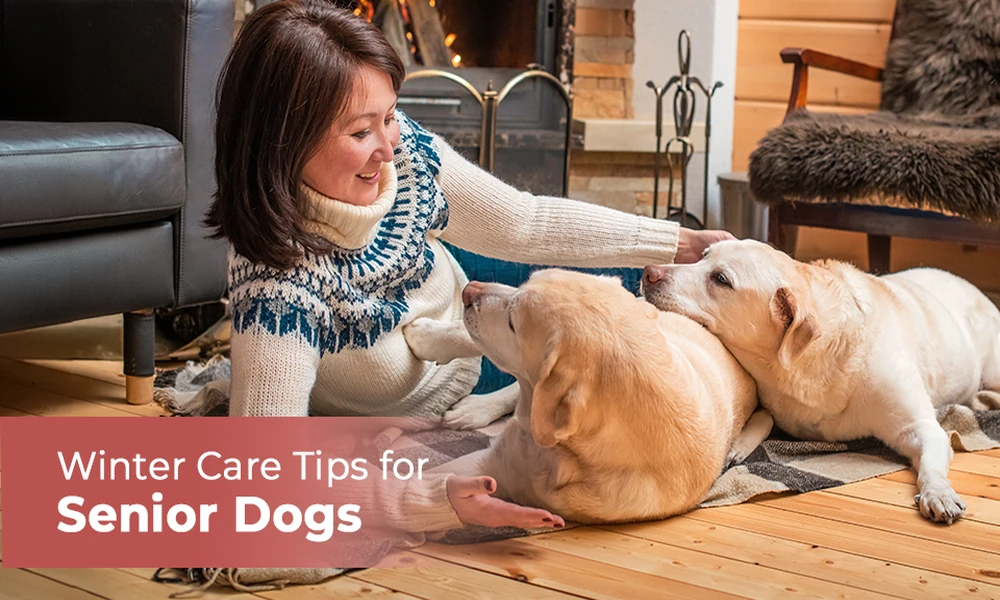
The winters bring many changes in the lives of senior dogs, especially in how comfortable they feel day to day. Colder air, drier indoor heating, and less daylight all add up, making the changes even more difficult for a dog whose joints and skin are already more sensitive to age.
Fortunately, most of the discomfort that shows up this time of year is manageable with a few consistent habits. This blog covers seven practical senior dog care tips for the colder months, focusing on both skin and joint health.
Making Winter Easier for Your Senior Dog
Taking care of a dog’s joint and skin health becomes increasingly important as they age. In fact, in a 2024 study of older dogs receiving veterinary care, musculoskeletal conditions accounted for 33% of consultations, while skin-related conditions made up for 28%.
That makes winter a good time to be a little more intentional about the everyday habits that keep your senior dogs comfortable, mobile, and protected.
Understand Why Winter Hits Older Dogs Harder
Aging bodies regulate heat less efficiently. Slower circulation, reduced muscle mass, and slower metabolism all make it harder for a senior dog to stay warm.
Arthritis is common in older dogs, and colder weather can make joint stiffness more noticeable.
That’s why senior dog care routines may need a little more attention as temperatures drop.
Treat Dry, Sensitive Skin as a Winter Priority
Keeping a check on our dog’s skin health during winter doesn’t have to be complicated. A moisturizing shampoo, regular brushing, and a humidifier in the rooms they spend the most time in can help.
If your dog keeps dealing with flakiness, dullness, or itching, rather than happening once in a while, you may want to look into dog skin and coat supplements. These can support dog skin health from within, rather than just working on the surface.
Watch for Early Signs, Not Just the Obvious Ones
A limp is usually hard to miss, but the first signs of joint discomfort can be easier to overlook. You might notice your dog walking a little slower, hesitating before jumping onto the couch, seeming stiff after getting up, or standing with their legs a bit farther apart.
On the skin side, flaky patches, dull-looking fur, and cracked paw pads are often some of the first signs of dryness.
Support Joints from the Inside, Consistently
Joint supplements for dogs come up often in winter care conversations, and for good reason. These low-risk supplements are commonly recommended by vets alongside other joint-friendly habits.
If the stiffness becomes noticeable, it’s worth browsing dog hip and joint supplements and checking in with a vet to find the right dosage for your dog.
Give Aging Joints a Softer Landing
An orthopedic or memory-foam bed placed away from cold drafts takes real pressure off hips, elbows, and spines that have lost some natural cushioning.
If your dog has always slept on a thin mat, winter is the right time to upgrade. Ramps or pet stairs near furniture also help avoid the kind of jump-and-land movement that aggravates sore joints.
Protect Paws Before Problems Start
Cold pavement, ice, and rock salt are rough on any dog’s paws, but senior paw pads have thinned with age and don’t recover from cracking as easily.
A pet-safe paw balm applied before and after walks helps maintain a protective barrier. Booties are also worth trying, since they add grip on slippery surfaces, which matters more when joints are already asking for extra caution.
Don’t Skip the Seasonal Vet Visit
A lot of winter discomfort gets quietly written off as “just getting older.” Sometimes that’s accurate. Sometimes it’s early arthritis or a skin condition that responds well to treatment once it’s properly diagnosed.
A seasonal checkup for your elderly dog care can help your vet spot changes early, ensure any supplements are suitable, and check that there isn’t another issue that requires more than home care.
The Bottom Line
None of these tips requires overhauling how you care for your dog. It’s mostly about paying closer attention during a season that’s genuinely harder on aging bodies.
Softer landings, protected paws, supported joints, and skin that gets a little extra help staying comfortable go a long way toward a senior dog who’s still enjoying their walks, naps, and favorite spot by the window all winter long.
Frequently Asked Questions
Is glucosamine safe for dogs to take long-term?
Yes. Glucosamine for dogs occurs naturally in cartilage, so long-term supplementation is well tolerated by most dogs, with digestive upset being the rare exception. It’s best to ask your vet about the dosage and whether it’s suitable for your dog’s size and health history.
Why does my senior dog’s skin get so dry in winter?
Cold air is already dry, and heating indoors can make things even drier. Older dogs also tend to have less natural oil on their skin than younger dogs, which can make flaking, dull fur, and itching more noticeable as temperatures fall.
How can I tell if my senior dog has arthritis or is simply slowing down with age?
Pay attention to stiffness after resting, hesitation when jumping or climbing stairs, or changes in the way your dog walks. If these signs continue for a couple of weeks, it’s worth having your vet check them to see if arthritis or another issue is involved.
How often should I bathe my senior dog in winter?
In winter, a bath every 4-6 weeks is usually enough for a senior dog. If your dog already has dry skin, you may want to bathe them less often. Frequent bathing can remove the skin’s natural oils, so go with a mild, moisturizing shampoo and see how their skin and coat look between baths.
Can joint supplements help an older dog?
Evidence on individual ingredients like glucosamine is mixed, but many dogs on consistent joint supplementation show improved comfort and mobility over several weeks. It’s not a guaranteed fix, but joint supplements for dogs are a low-risk addition; most vets are comfortable recommending them alongside other senior dog care recommendations.
***********