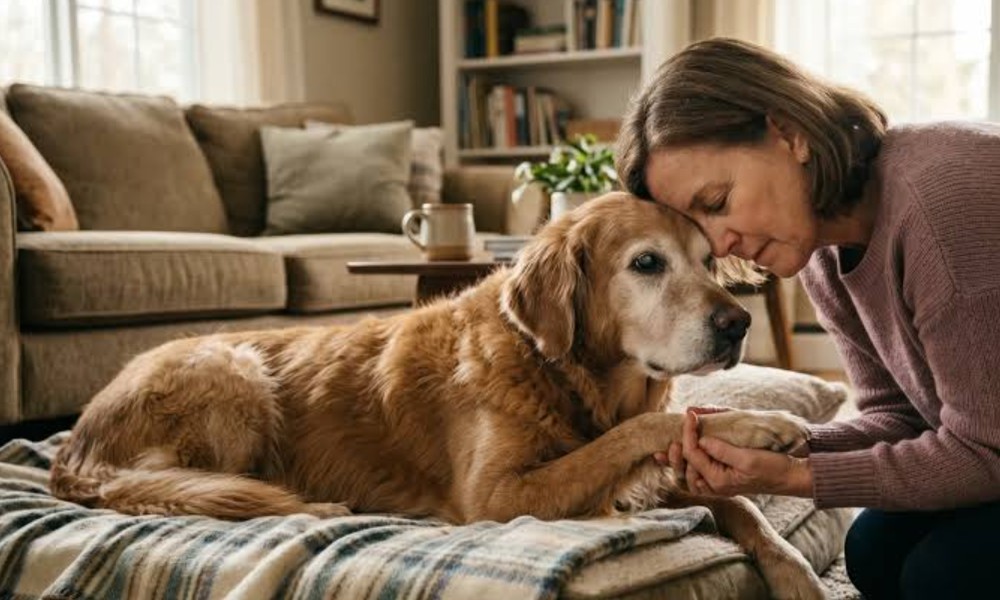
Nobody plans for this conversation. People plan holidays, renovations, even funerals for themselves sometimes. Almost nobody sits down and thinks about what they want to happen to their dog or cat after it dies, which means that when the moment arrives, the decision gets made in a waiting room, often within minutes, by someone who is not in any state to weigh up options. Veterinary cremation services exist in that gap – between a loss nobody prepared for and a decision that, once made, cannot be undone.
The Form on the Clipboard
Most people do not realise that the cremation decision at a vet clinic is often presented as a checkbox on a form handed over during one of the worst moments of someone’s week. Individual or communal. Ashes returned or not. Sign here. The clinic is not being careless – they are following a process that exists because most people, understandably, cannot think clearly at that moment. But the form does not explain the difference between those options in any meaningful way, and the person signing it is rarely in a position to ask. Families who have given even five minutes of thought to this beforehand – at any point in their pet’s life, not in a crisis – sign that form very differently.
What “Communal” Actually Means in Practice
Communal cremation is described gently, usually as a more affordable or simpler option, and for many families it is genuinely the right choice – not everyone wants ashes returned, and there is nothing wrong with that. What families are not always told is what the community actually involves. Multiple animals are cremated together. The resulting ashes are a mixture, and they are not separated afterward – they cannot be, physically. Providers typically scatter or inter these combined ashes, often in a dedicated memorial garden. This is a respectful and common practice. It is just not the same thing as receiving your own pet’s ashes, and the word “communal” alone does not always make that distinction land for someone hearing it for the first time, on a clipboard, in shock.
The Hours Nobody Thinks About
Between the moment a pet dies and the moment cremation happens, the remains have to go somewhere. Veterinary cremation services that collect promptly and store remains under proper refrigeration are doing something that sounds clinical but is actually deeply tied to dignity – preventing deterioration means the animal is treated with care right up until the process the family chose actually takes place. A delay of even a day or two without proper storage changes that. Most families never see this part of the process and never think to ask about it, but it is one of the clearest indicators of how seriously a provider takes the responsibility they have been given.
Why the Vet’s Recommendation Isn’t the Only Option
Clinics work with providers they trust, usually because of years of reliable collections and good communication. That trust is generally well placed. But it is worth knowing that a family is never obliged to use whichever provider happens to be the clinic’s default – and that asking the question, even gently, does not create awkwardness. Veterinary cremation services vary in what they offer beyond the basic process, and a family with a specific wish – a particular memorial item, a request to be present, a preference about timing – may find that a different provider, or a conversation with the same one, opens up options that were never mentioned because nobody asked.
The Paw Print Nobody Knew They Could Ask For
This is the one that comes up again and again, months later, as a regret. Paw print impressions, fur clippings, and similar keepsakes generally need to be taken before cremation – which means they need to be requested at the very moment when almost nobody is thinking about keepsakes. Families who later wish they had something physical to hold onto often did not know it was an option until it was too late to arrange. A provider or clinic that mentions this gently, without pushing, gives families a choice they would otherwise lose entirely.
Conclusion
Veterinary cremation servicescarry far more weight than the paperwork suggests. The choice between individual and communal, the hours before cremation takes place, the provider chosen, and the small things like paw prints that can only happen at one specific moment – all of these shape how a family remembers saying goodbye. A little awareness, even gained well before it is needed, changes how that goodbye feels.