The kitten matures more rapidly than any other phase in the life of the cat, and in the first week they almost double their weight at birth. Correct weight gain is subject to proper nutrition, healthy digestive system, and absence of parasites. This guide describes the normal weight gain of a kitten and what the owners are to observe during this critical stage of growth. Being aware of proper kitten’s weight (子猫 の 体重) gain contributes to the transformation of kittens to being the best adult cats.
Explaining the normal pattern of kitten weight gain
Normal weight gain patterns by week
The mass of freshly born kittens is usually between three and four ounces, or a small tomato. The first few weeks of life should include between a quarter and 1/2 pounds per day. The most important weight milestones of growing kittens are as follows:
- First week: Kittens gain almost twice their birth weight within the first week, to six to eight ounces.
- Second week: Gain in weight of between ten to twelve ounces as eyes open and the nursing is more effective.
- Third week: Kittens weigh up to fourteen to sixteen ounces; and they become coordinated to wobble on their feet.
- Fourth week: The weight increases to one pound as the kittens would begin expressing interest in semi solid food.
- Eight weeks: By now, healthy kittens are expected to weigh between two and two and a half pounds, and have to be gained before leaving their new homes.
Nutritional requirements for healthy gains
Kittens require a greater number of calories per pound of body weight than adult cats due to overtime work by their bodies to create the tissue. The first four weeks are the most opportune period to use mother milk because commercial milk replacer is not required by orphaned kittens. The following are the feeding principles that will help in achieving the right weight increase:
- Frequent nursing: Kittens have a schedule of nursing every one to two hours and they eat little but frequently.
- Milk replacer temperature: Heat the formula to body temperature of approximately 100 degrees Fahrenheit and then bottle feed.
- Weaning transition: At four weeks, wet kitten food is added to formula, liquid being removed over 2 weeks.
- High-protein diet: Select kitten foods that contain a minimum of thirty percent protein to energize the growth of muscles.
- Free feeding: Have dry kitten food all the time after weaning; young kittens will control their consumption effectively.
How to monitor kitten weight accurately
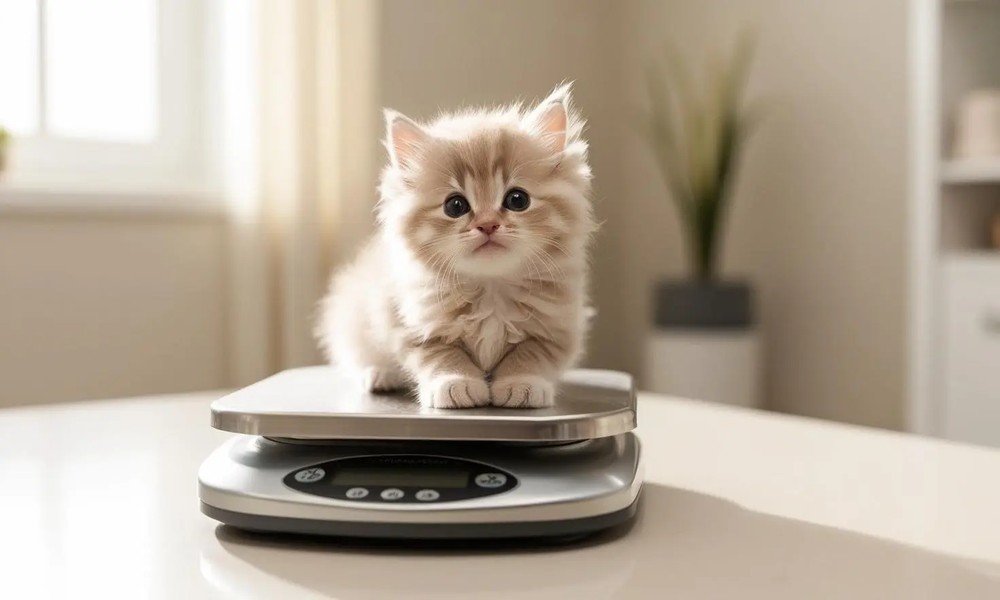
When all measurements are done on the same scale, this will provide similar monitoring on the progress of growth. A digital kitchen scale that is in grammes is the most accurate to use when dealing with small kittens. The following are the best practices of weight monitoring
- Daily weighing: Weigh kittens at the same time each day, usually before the morning.
- Consistent method: Put a bowl or box either on the scale or it should be zeroed and put a kitten inside.
- Record keeping: Capture any weight as it occurs; changes cannot be followed by memory alone.
- Compare with littermates: A lagging behind kitten may require additional feeding or care.
- Monitor trends: Monitor the overall trend and not the number of a single day to evaluate actual growth.
Discussing the frequently asked questions
Will a kitten be overweight?
Gaining weight at a rapid rate in the initial weeks is normal but too much obesity in the old kittens may cause health complications.
What causes a kitten to lose weight despite eating?
The most prevalent cause is intestinal parasites, a fecal test can be done and dewormer given by a vet.
Which age would you predict a kitten to gain weight?
The mean weight of most of the kittens doubles within the seventh or ten days of life.